Dr Michael Chagnon · 23 July 2026, 5 pm BST
Abstract
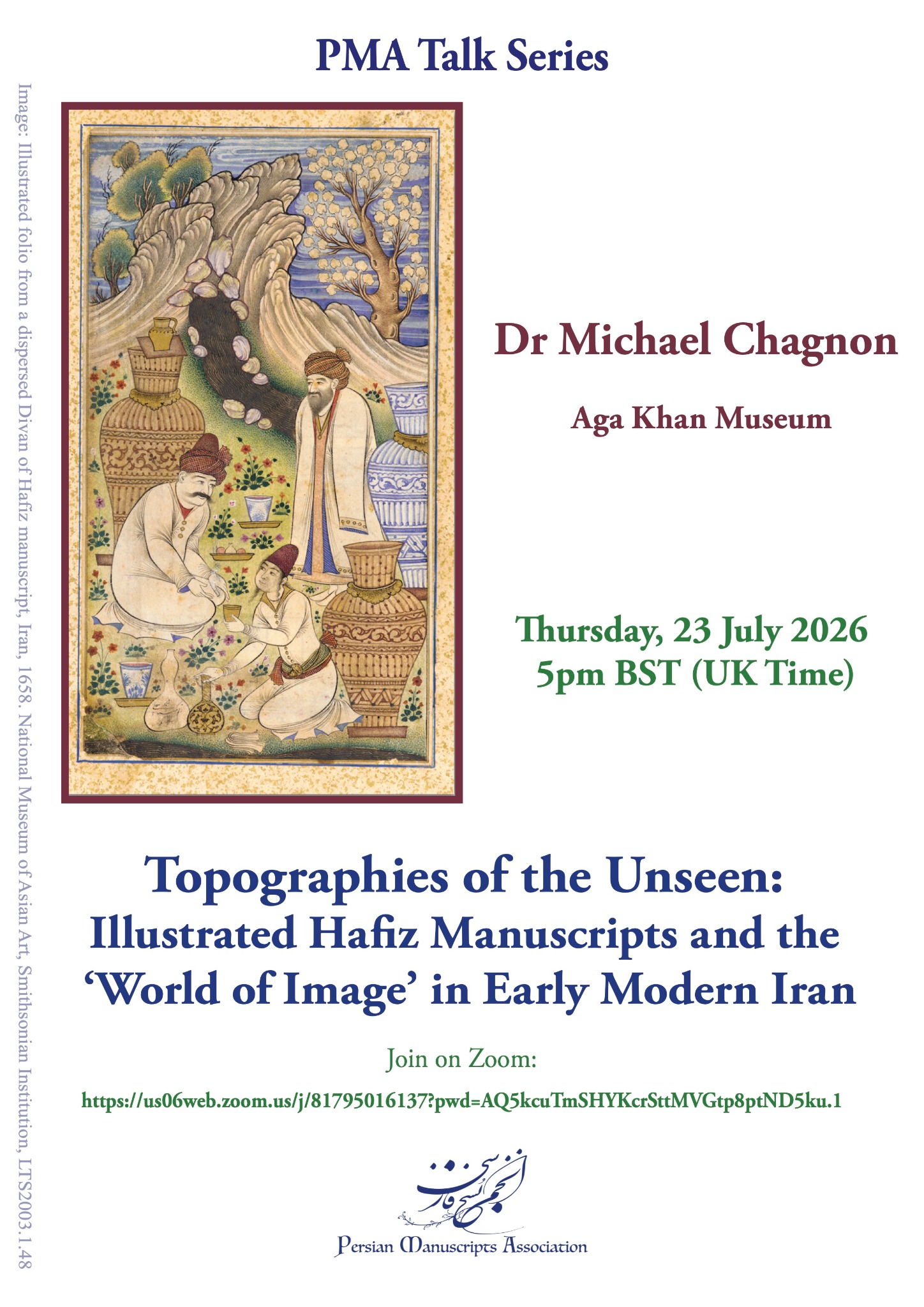
Hafiz of Shiraz (d. 1390) is considered the foremost lyric poet of the medieval Persian tradition. Since the fifteenth century, his Divan has been revered for its oracular authority, reflected both in its use as a tool of bibliomancy (fal) and in an epithet shared by poet and compendium alike: lisan al-ghayb, the Tongue of the Unseen. A sumptuously illustrated manuscript of the Divan from 1658, now dispersed, features paintings that depict varied combinations of stock characters who inhabit Hafiz’s verses—sufis, wine-servers, and musicians, among others. The figures are executed in pen-and-ink and are often set within chromatically brilliant landscapes, disrupting the conventional relationship between figure and ground. This lecture presents new discoveries in the manuscript’s codicological features and explores its distinctive pictorial language in relation to its intended bibliomantic application. This nexus of form and function will be situated within philosophical currents of later Safavid Iran, particularly a revived interest in ‘alam al-mithal (“the World of Image”), a liminal realm bridging the material and immaterial worlds.
About the speaker
Dr Michael Chagnon is a specialist of early modern Persianate painting and arts of the book. He has served as Curator at the Aga Khan Museum since May 2019, where he has curated numerous acclaimed exhibitions, most recently ‘Rumi: A Visual Journey through the Life and Legacy of a Sufi Poet’ (2023). Dr Chagnon also serves as Assistant Professor (status-only) in the Departments of Art History and Near and Middle Eastern Civilizations at University of Toronto. His recent publications include the essays “Reza ‘Abbasi and the Embedded Image” (2024), “Interpreting a Later Safavid Vase: Between Material, Object, and Image” (2024), and “Flirting with the Radical: Intertextuality, Intervisuality, and Gendered Subversions in Manuscripts of Suz u Gudaz” (2021).